State of UEFN: What Changed in 2025 & What’s Next
2025 marked a defining year for Unreal Editor for Fortnite (UEFN). What began as a powerful creation tool continued its transition into a full-fledged game development and publishing ecosystem, one that now supports monetization, live-service workflows, advanced physics, scalable UI systems, and deeper player–creator relationships.
Over the course of the year, Epic Games shipped a steady cadence of updates that reshaped how creators build, publish, promote, and sustain islands. Some changes were incremental quality-of-life improvements. Others fundamentally altered what kinds of games are viable in Fortnite.
Let’s look back at the most impactful UEFN changes in 2025 and examines what the early 2026 roadmap suggests about where the platform is headed next.
UEFN in 2025: From Toolset to Platform
The most important story of 2025 is not any single feature—it’s the shift in UEFN’s role.
By the end of the year, UEFN was no longer positioned as “Creative with extra power.” Instead, it increasingly resembles a modular, service-oriented platform where creators:
- Build long-term, update-driven experiences
- Monetize directly inside their islands
- Manage analytics, payouts, and communities
- Target multiple platforms, including mobile
This shift framed nearly every major update throughout the year.
Monetization Took Center Stage
In-Island Transactions
One of the most consequential developments of 2025 was the rollout of in-island transactions. After years of relying solely on engagement payouts, creators gained the ability to sell items, access, and gameplay enhancements directly within their islands.
Key milestones included:
- Introduction of Verse-based transaction APIs
- Debug and testing tools for purchase flows
- Clear definitions for “consequential to gameplay” items
- New disclosure and developer rule requirements
- A scheduled publishing launch set for January 2026
This marked Fortnite’s first true step toward creator-driven in-game economies—bringing UEFN closer to traditional free-to-play game models while retaining Epic’s platform-level safeguards.
Monetization Analytics and Creator Portal Evolution
Alongside transactions, Epic consolidated monetization data into the Creator Portal, signaling a long-term move away from fragmented analytics tools. By late 2025, creators could:
- View monetization across multiple islands
- Track performance trends
- Prepare for downloadable reporting tools
The retirement of the legacy analytics site reinforced that Creator Portal is now the operational hub for UEFN businesses.
Physics: From Experimental to Publishable Gameplay
Physics development was another major throughline in 2025.
What began as experimental features evolved into publishable systems, enabling entirely new genres of Fortnite experiences:
- Physics-enabled props and environments
- Player-driven object interaction
- Emergent gameplay through force, impulse, and collision
By late 2025, creators could publish physics-enabled islands, supported by:
- Dedicated physics Verse APIs
- The Add Physics tool for bulk workflows
- The Chaos Visual Debugger for deep inspection
These updates moved UEFN closer to Unreal Engine–level systemic gameplay, while still operating within Fortnite’s performance and safety constraints.
Verse Maturity and API Stabilization
Verse continued to mature rapidly throughout 2025, transitioning from a promising new language into a production-ready scripting foundation.
Key Verse Trends in 2025
- Expansion of Scene Graph–based APIs
- Better error handling and validation
- Removal of legacy patterns in favor of explicit systems
- Growing standardization across devices and components
Major systems such as inventory, physics, UI, AI behaviors, and monetization now rely on Verse as the connective tissue.
This consolidation reduced ambiguity for creators and made large projects more maintainable, even as it required some painful refactors during API transitions.
UI and UX Became First-Class Systems
User interface development saw a major leap forward in 2025.
Verse-Driven UI
The introduction of Verse Fields in UMG unlocked dynamic, data-driven interfaces. Creators gained the ability to:
- Update widgets via Verse
- Drive animations and materials programmatically
- Build custom HUDs and menus
This was especially important for genres like tycoons, RPGs, and live-service games, where UI is core to progression and monetization.
Mobile-First UI Considerations
As Fortnite expanded its mobile footprint, UEFN added:
- Mobile Preview modes
- Touch input customization
- Mobile-specific HUD visibility controls
These updates made it clear that mobile parity is no longer optional for long-term island success.
Brand Islands and IP Expansion
2025 also solidified Epic’s strategy around branded content.
Creators gained the ability to convert existing islands into brand islands, unlocking:
- Official IP assets
- Brand-specific rulesets
- Expanded creative opportunities
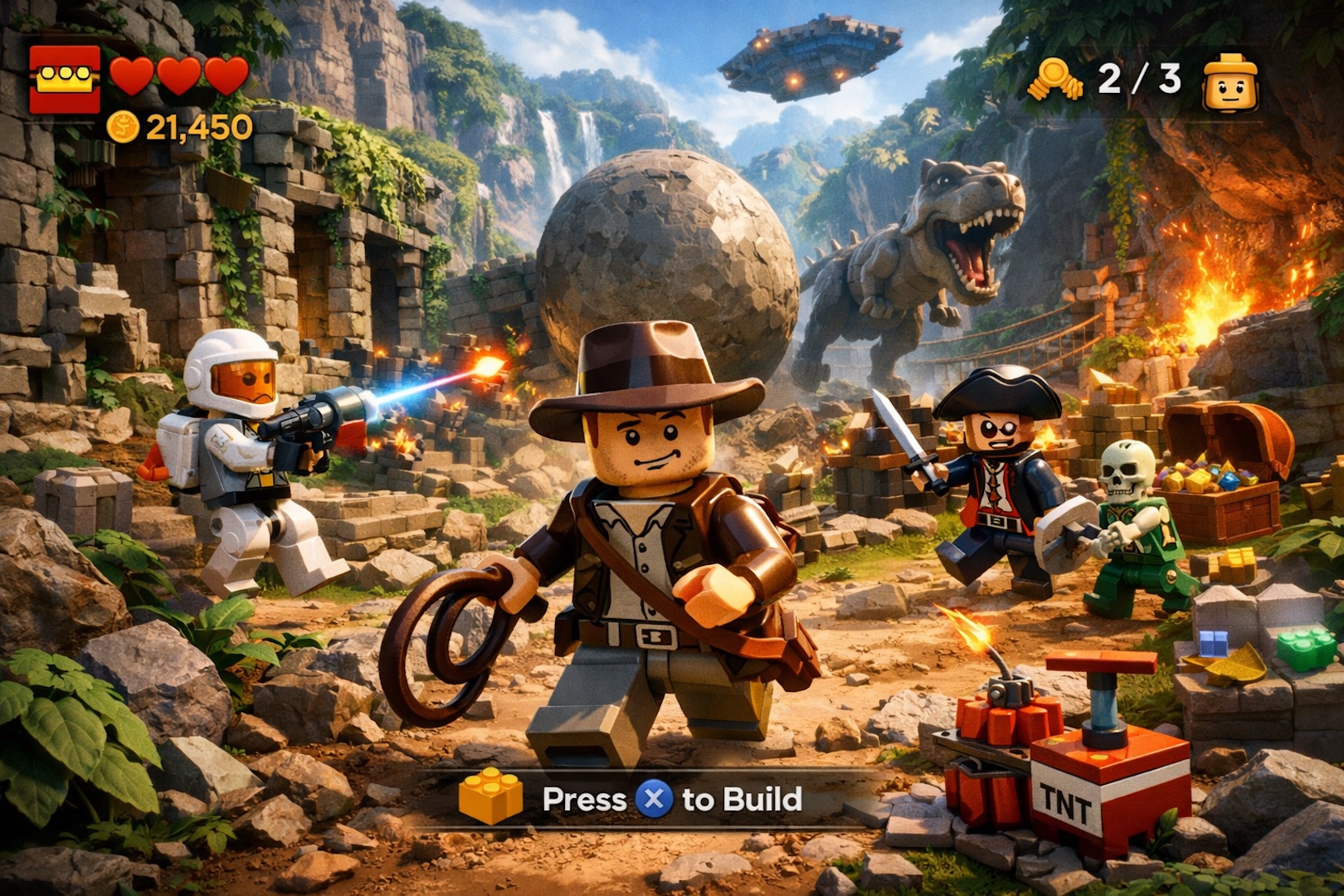
Major brand drops throughout the year including LEGO®, Squid Game, and anime-inspired collaborations demonstrated that UEFN is now a primary delivery mechanism for licensed Fortnite experiences.
This trend suggests that IP-based islands will continue to grow in both scale and importance.
Communities and Creator-Player Relationships
Late 2025 introduced Fortnite Communities, signaling a shift in how creators communicate with players.
Instead of relying exclusively on external platforms, developers can now:
- Publish announcements directly into Fortnite
- Surface updates in island lobbies and Discover
- Manage moderation and analytics in Creator Portal
This feature reinforces Fortnite’s push toward becoming a self-contained ecosystem not just for gameplay, but for community-building.
Tooling, Performance, and Quality-of-Life Gains
While headline features drew attention, many of 2025’s most impactful changes were incremental improvements that removed friction:
- Faster memory calculation and enforcement
- Improved Fortnite Tools for placement and diagnostics
- Revision Control performance optimizations
- Better error messaging and validation
These changes reduced iteration time and made large-scale projects more feasible for small teams.
What the 2026 Roadmap Suggests
Looking ahead, Epic’s public roadmap points toward several clear priorities for early 2026.
Monetization Goes Live
With publishing for in-island transactions opening in January 2026, the ecosystem is preparing for:
- Live economies inside islands
- Ongoing balance between monetization and fairness
- New best practices around value, disclosure, and trust
This will likely reshape how top islands are designed from the ground up.
Deeper Systems, Fewer Experiments
Many roadmap items suggest a shift from experimentation to refinement:
- Stabilizing Scene Graph systems
- Expanding AI and NPC behaviors
- Improving UI event handling
The focus appears to be on reliability and scale rather than novelty.
Mobile and Performance Optimization
Mobile-first tooling continues to feature prominently, indicating that performance budgets and UI clarity will matter more than ever.
Creators who ignore mobile considerations may find their reach increasingly limited.
Strategic Takeaways for Creators
As UEFN enters 2026, several strategic lessons stand out:
- Live-service thinking is now essential
- Monetization requires design intent, not retrofitting
- Verse literacy is a competitive advantage
- UI and UX are no longer optional polish
- Community management happens inside Fortnite now
UEFN rewards creators who think like game studios, not just map builders.
Conclusion: UEFN’s Inflection Point
2025 will likely be remembered as UEFN’s inflection year—the moment it crossed from powerful creation tool into a true platform for sustainable game development.
With monetization going live, communities launching, and core systems stabilizing, 2026 is shaping up to be less about experimentation and more about execution.
For creators willing to adapt, the opportunity has never been larger. For those who don’t, the gap between hobbyist maps and professional-grade islands will only continue to widen.
To explore upcoming features and track Epic’s priorities for the year ahead, creators should regularly review the official Fortnite Creator Roadmap.
Join the Creative Blok Community Discord
If you’re building seriously in UEFN and want to stay ahead of platform changes, monetization shifts, and best practices, consider joining the Creative Blok Discord. It’s a space for Game Developers and Creators to share insights, discuss updates, get feedback on their games, and collaborate as the gaming industry continues to evolve.
Whether you’re experimenting with new systems or scaling a live-service island, The Creative Blok is built for creators who want to grow with the ecosystem.